
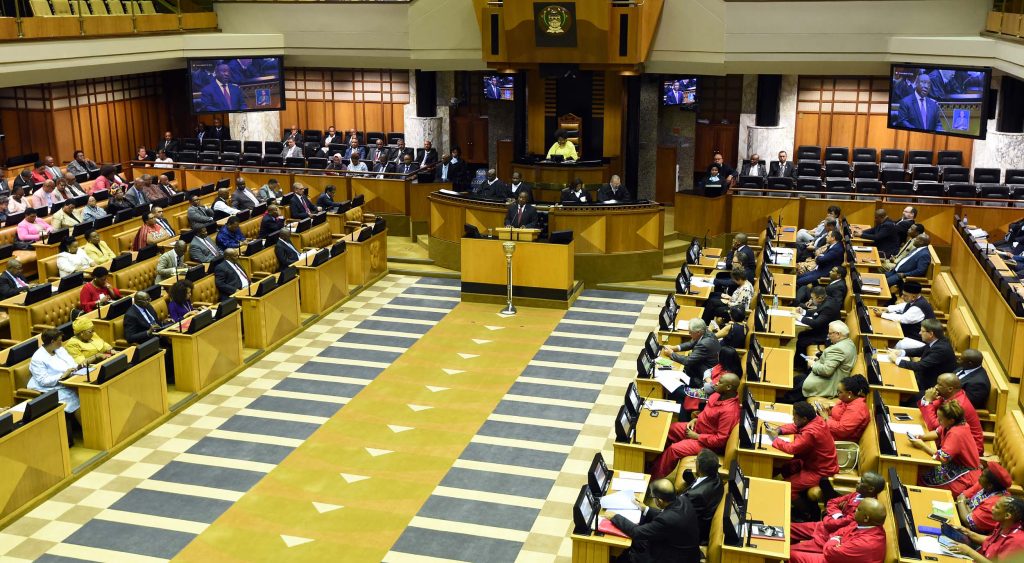
In South Africa’s apartheid period from 1948 to 1994, the manager arm of presidency dominated over parliament. In any system, this permits a small group of politicians to dominate the bigger physique of elected representatives from which they’re drawn, with no efficient limitations. Corruption and abuse of energy virtually at all times comply with straight.
Firstly of the brand new democratic period, the drafters of the 1996 structure modified this. The structure provides the legislature the authority and the duty to supervise the train of public energy, and maintain the manager accountable.
The structure incorporates practically 40 provisions to do that. Chief amongst these provisions is part 55 (2):
The Nationwide Meeting should present for mechanisms – (a) to make sure that all government organs of state within the nationwide sphere of presidency are accountable to it; and (b) to keep up oversight of (i) the train of nationwide government authority, together with the implementation of laws; and (ii) any organ of state.
The foundational values of “accountability, responsiveness and openness” in part 1(d) of the structure demanded a radical change in parliament’s relationship with the manager.
In 1994, the Speaker of Parliament started a spread of initiatives to get the change below method. I undertook three tasks at her request between 1996 and 1999:
- a system of obligatory disclosure of monetary pursuits by each MP and their instant relations
- a system of parliament scrutinising each piece of subordinate laws made by the manager to check it for constitutional compliance
- setting out parliament’s obligations below part 55 of the structure. That is now generally known as the “Corder Report”. I wrote this report with two colleagues.
The report really helpful laws to set requirements of accountability and institutional independence. It proposed new guidelines about how the 2 homes of parliament ought to report back to parliamentary committees. And it instructed there must be a Standing Committee on Constitutional Establishments, primarily what the structure calls the State Establishments supporting Constitutional Democracy, or the Chapter 9 our bodies. These embody the Public Protector, the Human Rights Fee and the Auditor-general.
Parliament responded solely partially and ineffectively. It referred the matter to the Guidelines Committee, which modified some portfolio committee processes. However the adjustments didn’t embrace the spirit of the constitutional obligations.
Parliament didn’t reside as much as its constitutional mandate. This failure was famous by the State Seize Fee as having contributed to the relative ease with which the administration of former president Jacob Zuma, and its fellow travellers, may corrupt state behaviour.
The absence of requirements of accountability and the truth that portfolio committees are usually not unbiased, are the explanations parliament is failing in its constitutional mandate to carry the manager accountable.
This issues as a result of the dearth of parliamentary vigilance has quite a few penalties. The primary is that the manager and public administration will succumb to the temptations that their energy provides them. The second is that the citizens is failed by its direct representatives. Thirdly, that the organs of state which should safe integrity (the courts and Chapter 9 establishments) are positioned below undue stress. And at last, it falls to civil society and public-spirited people to tackle the burden of difficult the abuse of energy.
Historical past of accountability
A situation of the train of energy in a constitutional democracy is that the administration or government is checked by being held accountable to an organ of presidency distinct from it.
Accountability means explaining selections or actions, making amends for any fault and taking steps to forestall a recurrence.
The separation of powers has been the muse stone of democratic authorities for the reason that seventeenth century. Public energy was divided among the many government, judicial, and legislative branches of presidency. Strategies of mutual checking and balancing have been established.
Throughout the twentieth century, government energy expanded in order to satisfy the wants of rising populations in a altering world.
The chief department thus got here to dominate the legislature. The judicial authority rose in prominence after 1945. This, as payments of basic rights and an rising emphasis on the lawful train of public energy made their method into nationwide constitutions.
African expertise
Virtually all African nations skilled these developments of their formal liberation from European imperialism within the second half of the 1900s.
The sample of allocating energy started to shift within the early Nineteen Nineties, with freedom coming lastly to Namibia and South Africa . This coincided with the collapse of the Soviet empire, and a rash of constitution-making in central and japanese Europe. This quickly adopted in primarily Anglophone Africa.
These new constitutions usually gave pleasure of place to payments of rights. They gave the superior courts the authority to check whether or not rights had been infringed and whether or not authorities selections and actions have been lawful and constitutional. The judicial department of presidency rose in political prominence. This, in flip, targeted consideration on judges’ independence and accountability.
Given the expertise within the developed world, the drafters of those new constitutions recognised that politicians would put stress on the courts. So the inclusion of what the South African structure calls state establishments supporting constitutional democracy took maintain.
Most trendy constitutions in Africa adopted swimsuit. They established our bodies such because the ombudsman or public protectors and human rights and gender commissions.
Impartial electoral commissions, auditors-general, and anti-corruption commissions additionally got here into being. These our bodies, collectively generally known as the integrity department of presidency, complement the assessment powers of the courts in holding the manager to account.
How have these preparations translated into follow?
The overall image throughout Africa is patchy. There are solely remoted examples of the legislature demanding solutions from the president and cupboard. This leads to the denial of constitutional rights. It places much more stress on the courts to come back to the rescue and exposes the judiciary to unwarranted assault.
The South African legislature is not any exception.
Failure of accountability
There are lots of the explanation why the South African parliament has failed to carry the manager accountable.
Foremost is the management that political celebration bosses train over members of parliament. That is because of the nation’s party-list proportional illustration electoral system.
The bulk celebration in parliament (the African Nationwide Congress) has held that place since 1994. It chairs all however one of many portfolio and standing committees, that are the chief mechanisms for accountability.
The place the celebration whip calls for unquestioning obedience, as has been the case, parliamentary committees ask few questions and fail to carry the manager to account. This, regardless of the most effective intentions of opposition (and even some governing) MPs.
It forces individuals to make use of entry to info routes or different much less open technique of exposing the abuse of energy or maladministration.
Because of this, the State Seize Fee has suggested that the electoral system and a few points of the committee capabilities must be reviewed. This might weaken the grip of the celebration on its MPs.
Given the divisions inside its ranks, the ANC is unlikely to advertise any steps that undermine the affect of its management cohort.
All those that worth the accountable train of public energy in a constitutional democracy will help such a suggestion. However few might be holding their breath.

Hugh Corder, Professor Emeritus of Public Legislation, College of Cape City
This text is republished from The Dialog below a Inventive Commons license. Learn the unique article.